

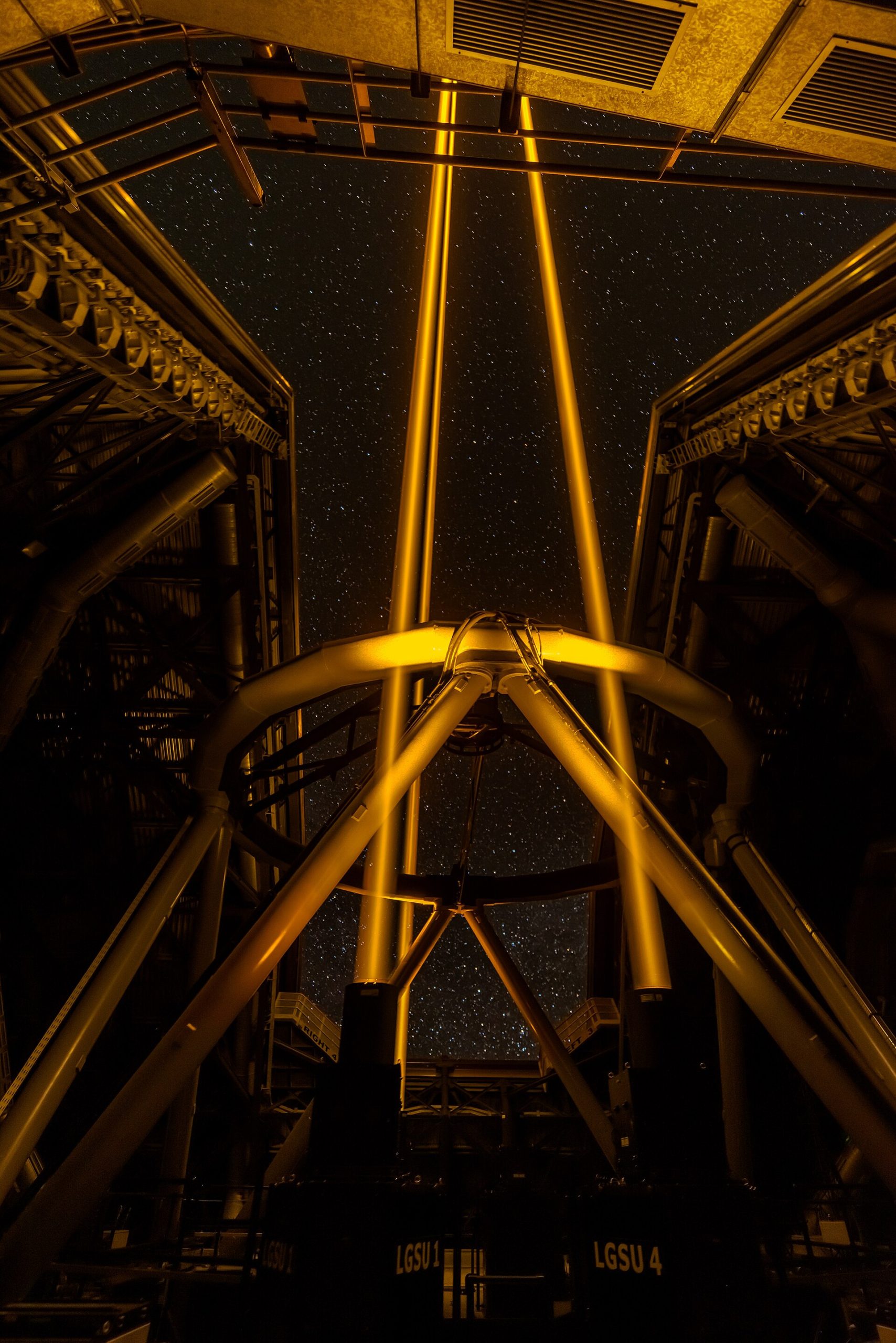
On a clear night, a patient observer can now see them without trying: chains of bright satellites crossing the sky at dusk, reflecting sunlight long after the ground has darkened. They belong to the new mega-constellations bringing broadband internet from low Earth orbit, and they have created one of technology’s most poetic disputes. The same satellites connecting remote villages are streaking the images of the telescopes that study the universe itself.
Both claims to the sky are legitimate, which is what makes the clash hard. Satellite internet has delivered real benefits to places cables never reached, from island communities to disaster zones. Astronomy, meanwhile, is not merely aesthetic: wide-field surveys that scan for asteroids, supernovae and clues about dark energy depend on clean skies, and a growing fleet means a growing fraction of exposures crossed by satellites. The debate tracked on our homepage is, at bottom, about how humanity shares a commons it had never had to manage.
What the Satellites Do to the Science
The effects come in several forms. In optical astronomy, bright satellites leave trails across images, and while software can flag and mask some trails, data underneath are lost and artefacts can mimic real events. Surveys are especially vulnerable because they stare at twilight skies, exactly when satellites are brightest. In radio astronomy, constellations transmit in bands close to those used to listen to the cosmos, and unintended emissions from satellite electronics have been detected by sensitive instruments.
Operators have not been idle. Successive satellite generations carry darker coatings, sunshades and orientation tweaks designed to reduce reflected light, and companies have shared orbital data so observatories can schedule around passes. Astronomers acknowledge real improvement while noting that the sheer number of planned satellites, across many operators and countries, works against every mitigation. Studies reported through Nature and astronomy journals try to quantify the trade, balancing connectivity gains against a measurable dimming of humanity’s view.
Rules for a Crowded Sky
Governance lags behind deployment. Satellites are licensed nationally, the sky is shared globally, and no international body sets brightness limits for orbit. Astronomers’ unions and scientific bodies have called for brightness standards, environmental assessment for large constellations and coordination requirements, arguing that the night sky is scientific infrastructure and cultural heritage at once. Industry voices counter that voluntary measures are working and that heavy rules would slow connectivity for the world’s least connected people.
Common ground exists in the details: better orbital data sharing, receiver standards to curb unintended radio noise, and design requirements phased in as fleets renew. Reporting by BBC News on observatory-operator talks shows a dispute slowly becoming a negotiation. The alternative, a sky filled faster than science can adapt, serves even the operators poorly, since public goodwill is a licence condition of its own kind.
Looking Up, Together
There is a quiet irony in the story. The satellites exist because people want connection; the telescopes exist because people want understanding, and both impulses are forms of reaching upward. For most of human history the night sky needed no defence because nothing we built could trouble it. That era has ended, and managing the sky has joined managing the oceans and the climate as a shared stewardship problem.
The likely outcome is neither a pristine sky nor a ruined one, but a negotiated one: dimmer satellites, smarter scheduling, protected radio quiet zones and acceptance that the heavens now carry traffic. Astronomy has survived light pollution from cities by retreating to deserts and mountaintops; it cannot retreat from orbit. The clash will be settled, if it is settled well, by the principle both sides claim to serve: that looking up should remain possible for everyone.
