

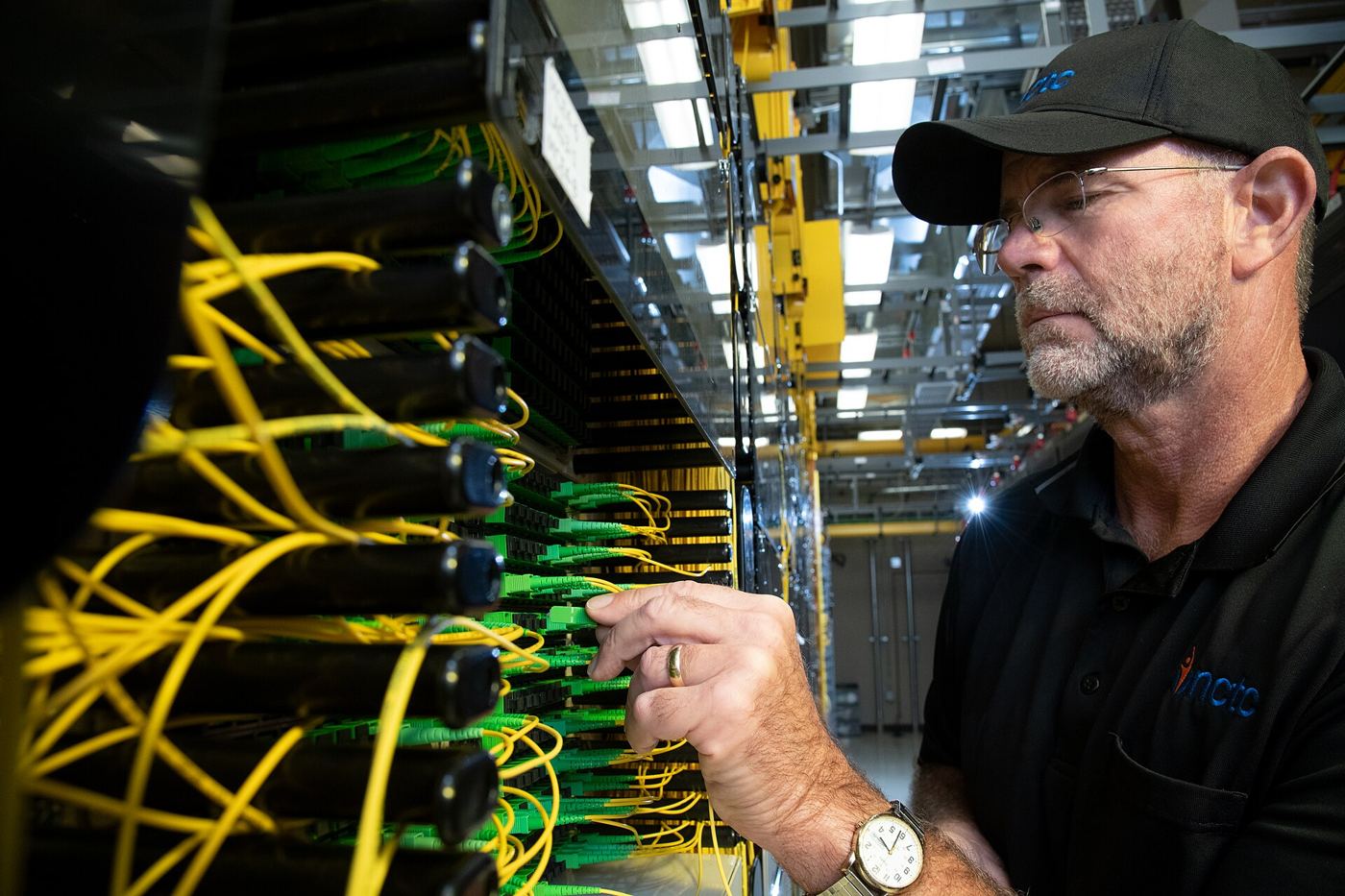
Existing fibre optic cables buried beneath streets and countryside are being turned into giant sensing networks capable of detecting earthquakes, traffic and ground movement with remarkable sensitivity. The technique sends laser pulses through a fibre and measures tiny changes in the reflected light caused by vibrations or stretching along the cable. A single cable can therefore act like thousands of individual sensors spread over many kilometres, including places where installing conventional instruments would be expensive or impractical. Researchers have used the method to record small earthquakes, track ocean waves, monitor pipelines and observe underground construction, all through networks originally built for communications. Because so much fibre is already in the ground, the approach could fill major gaps in seismic monitoring, especially in cities and developing regions. Scientists are now working to separate useful signals from the everyday noise of vehicles, trains and machinery, and to calibrate fibre measurements against established seismometers so the results can be trusted for warnings and research.
What the Evidence Shows
The technology raises interesting questions about access, since the most useful cables belong to telecom companies, cities and private operators rather than research agencies. Specialists following fibre optic sensing networks say that partnerships are forming to share data for public safety, provided commercial traffic and customer privacy are fully protected. Processing the data is another challenge, because a busy urban cable generates continuous streams that require automated analysis to spot meaningful events quickly. Machine learning systems are being trained to distinguish earthquakes from construction work and heavy vehicles, improving with each confirmed event. There are limits, as fibre sensing measures strain rather than the full motion recorded by a traditional seismometer, so the two approaches complement rather than replace each other. Even with those caveats, turning communications infrastructure into a planetary listening system could transform how societies monitor the ground beneath them. Reporting and analysis from sources such as Wired track the same developments, and specialists following fibre optic sensing networks say the direction is now consistent across independent lines of evidence.
The Wider Context
The wider context is an industry learning to ship capability and restraint together. Products built around fibre optic sensing networks now launch with safety evaluations, usage data and rollback plans as standard, because enterprise buyers and regulators ask for them in the first meeting. Companies that treated those questions as friction are discovering they have become the purchase criteria.
What Happens Next
What happens next for fibre optic sensing networks depends less on another breakthrough than on the unglamorous work of reliability, pricing and support. The buyers evaluating it now are not enthusiasts; they are operators with budgets and auditors, and their checklists will decide the timeline. On the evidence of the current pilots, the technology has earned the right to be judged by them. You can follow related developments in our coverage of technology.
None of this will be settled by a single announcement, study or product launch. The pattern to watch is accumulation: independent confirmations, honest reporting of failures and steady improvement in the underlying numbers. Readers who follow those signals, rather than the loudest claim of the week, will understand this subject better than most of the commentary surrounding it suggests is possible.
